Wizard Slots deposits with cards, wallets and phone bill
 Available in GB
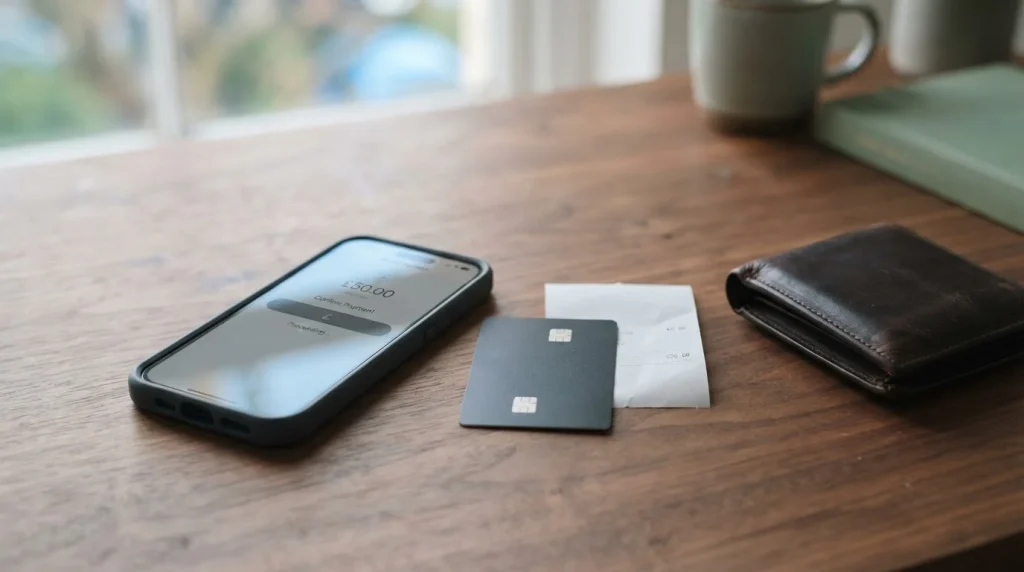
Wizard Slots accepts GBP deposits using debit cards, e-wallets, PaysafeCard and phone-bill payments. The £10 transaction minimum applies across the named methods, but the funding source and total fee can differ. Pay by Mobile carries a £2.50 charge per deposit and cannot be used to receive a withdrawal.
Knowing that distinction makes it easier to compare a bank-card charge with a phone-bill charge and keep track of money transferred into an account. The sections below follow the deposit through its price, funding route and identity rules.
Table of Contents
- What happens when money enters the cashier
- The £2.50 mobile charge changes the total outlay
- Debit cards, e-wallets and prepaid funds
- Why the payment name and account name must match
- How Fonix phone-bill deposits differ from wallets
- Questions about GBP banking
- Phone-bill convenience adds a predictable £2.50 cost
What happens when money enters the cashier
Wizard Slots handles real-money deposits in pounds sterling (GBP), with a £10 minimum per transaction. The listed cashier choices include Visa Debit, Mastercard Debit, Maestro, PayPal, Skrill, Neteller, PaysafeCard and Pay by Mobile. They share the same deposit currency and minimum, yet the account being charged can be a debit card, an online wallet, a prepaid funding method or a mobile phone bill. That distinction matters because the amount leaving a payment source can include a charge separate from the amount credited to the casino.
A deposit is a movement of money into the gambling account, not a withdrawal in reverse. Wizard Slots’ terms require payment methods to belong to the same named person as the casino account. The identity of the person behind a card or wallet can therefore matter again when a cash-out is requested, even after a deposit has been accepted. The casino also treats deposits and bonus winnings as different balance types: a promotional cash-conversion limit does not make a real-money deposit a bonus balance.
The most useful first comparison is between the cashier amount, the charge on the funding source and the route that can later receive money. For example, a phone-bill payment has a named transaction fee and cannot itself receive a withdrawal. A card or PayPal account operates under a different funding arrangement. The wider GBP payments overview compares the listed methods, while the withdrawal guide addresses how funds leave the casino.
All gambling deposits risk financial loss once wagered. A useful personal budget measures the full amount charged, including any payment charge, and treats money sent to the casino as entertainment expenditure rather than a way to earn an income.
The £2.50 mobile charge changes the total outlay
Wizard Slots applies a £2.50 charge to each Pay by Mobile deposit. The charge is per transaction, not a percentage of the deposit value. The distinction is particularly visible at the £10 minimum: one £10 mobile deposit plus a £2.50 transaction charge represents £12.50 charged in a straightforward arithmetic example. It does not mean £12.50 is credited as playable casino funds; the £10 deposit and £2.50 fee are separate amounts.
| Illustrative mobile deposit | Mobile transaction fee | Total amount charged |
|---|---|---|
| One £10 deposit | £2.50 | £12.50 |
| Two separate £10 deposits | £5.00 combined | £25.00 combined |
| One £20 deposit | £2.50 | £22.50 |
These totals are examples calculated from the published fee and deposit minimum, rather than additional casino fee tiers. Two separate small deposits incur the fixed charge twice; a single transaction incurs it once. This makes the count of transactions a meaningful part of the cost, alongside the headline amount entered. It does not change the chance of a result in a slot or live game, and it does not reduce a game’s house edge.
Pay by Mobile is the specifically named deposit exception. The listed casino payment methods do not justify treating every debit card or wallet as subject to that identical £2.50 mobile fee. Equally, an unlisted method-specific charge should not be represented as zero. Banks, wallets and prepaid services can have their own arrangements, especially when a different funding account or currency is involved. The £2.50 figure above is the casino’s mobile deposit charge, not a comprehensive schedule of all costs a financial provider might impose.
A fixed transaction fee is money lost to a charge before any stake is placed. Repeatedly moving additional funds to recover a gambling loss only adds financial exposure; the more useful safeguard is a spending limit that includes fees as well as wagers.
Debit cards, e-wallets and prepaid funds
Wizard Slots lists Visa Debit, Mastercard Debit and Maestro among its payment methods. These are personal debit-card routes rather than a category of credit line. The casino’s listed e-wallets are PayPal, Skrill and Neteller, while PaysafeCard appears as a prepaid option. An e-wallet can present a different transaction interface from a card, but that does not make it an anonymous casino account or exempt it from the operator’s identity and ownership rules.
It helps to distinguish the payment brand shown in the cashier from the institution that ultimately funds the transaction. A wallet might have its own balance or a linked source; the casino’s method list alone does not determine the arrangements, fee or timing of that separate provider. For the same reason, the presence of a listed funding method does not establish that it will also be a payout destination in every account situation.
- Debit card route: the account holder’s personal card details must match their casino identity, and the operator allows up to three registered cards.
- Wallet route: PayPal, Skrill and Neteller provide alternatives to entering a card as the direct casino payment method; their own account arrangements are separate.
- Prepaid route: PaysafeCard is listed for funding. A prepaid deposit is not itself evidence that the same instrument can receive cash.
- Mobile route: Pay by Mobile is charged to phone credit or a bill and is a deposit-only method.
PayPal has a further role in Wizard Slots’ product description: the site offers a PayPal-assisted quick-registration path. That is an account-access feature alongside the PayPal funding option. It does not replace the ordinary requirement that money belong to the named account holder or the documentation checks described for withdrawals. The full sequence of sign-in, payment identity and document review is covered in the account verification guide.
Using the same account identity consistently matters more than the apparent convenience of a particular method. A deposit is one part of a wider record of account access, ownership and later payment routing.
Why the payment name and account name must match
Under Wizard Slots’ terms, a person must use payment methods registered in their own name. The casino also limits the account to three linked cards. These conditions connect the identity used at registration to the identity behind funding. They are relevant to households where people share a computer, phone or internet connection but do not share a gambling account.
Payment ownership and account identity are not merely an initial sign-up question. The operator describes verification involving a photographic identity document, recent proof of address and relevant payment-method evidence, with the first withdrawal being a particularly important checkpoint. A successful card payment therefore does not mean every later identity check has been completed. The practical consequence is that the card, wallet and casino account should all represent the same person.
- Identify the payment source: recognise whether the casino debit originates from a personal card, wallet balance, prepaid purchase or phone bill.
- Keep the matching information: retain a transaction record and the details necessary to identify the owner of that source. Avoid sharing sensitive account credentials or complete card information with third parties.
- Read requests through the account’s official channels: if identity checks arise later, distinguish a request for proof of ownership from a demand for another deposit.
- Separate the stages: payment acceptance, document approval, withdrawal processing and final arrival are different events.
Wizard Slots’ terms also treat third-party payments, chargebacks and misleading payment information as matters that can trigger restriction or investigation. Those are operator rules, not an automatic statement that a particular player has done anything improper. A chargeback is especially different from a normal payout request: it is an issue between financial and account processes that can lead to an investigation of the transaction.
The cash-out timeline and documents page explains why proof of address and identification can matter even after funds have appeared in a balance. This sequence is worth understanding before treating a successful deposit as proof that an eventual payment will follow the same route.
How Fonix phone-bill deposits differ from wallets
Wizard Slots describes a Fonix-powered Pay by Mobile deposit method. Rather than presenting the payment as a transfer from a conventional bank account or e-wallet, it charges the relevant mobile phone credit or bill. The route is therefore tied to the funding mechanism of a phone service, with the casino’s fixed £2.50 transaction charge applied to the deposit. It remains a real-money casino deposit after the transaction has been processed.
The term “Pay by Mobile” can be misleading when taken out of context. It describes how money is added, not a universal mobile wallet for both depositing and withdrawing. Wizard Slots’ terms exclude Pay by Mobile as a withdrawal destination. A player who funded the casino this way does not receive a cashout as a credit back to the same phone bill. A permitted receiving method and the required account checks form a separate path.
That difference also explains why the general cashier method list and the cash-out method list cannot simply be copied into one another. PayPal is described by the casino as available for withdrawals, and personally registered debit cards are used for receiving money, but the mobile-bill payment sits only on the funding side. A payment method being offered inside a mobile browser or app does not change this distinction.
For someone reviewing an account statement, a phone-bill casino charge can be easier to overlook than a bank-account transfer because it appears among phone service costs or credit usage. The arithmetic is still the same: the deposit is gambling money, the £2.50 is an additional charge, and any gambling loss affects the balance separately. Looking at the complete phone bill or credit transaction provides a more accurate spending picture than counting only the amount credited by the casino.
The wider payments and fees guide puts this charge beside the other GBP funding options. The key limitation remains structural: phone-bill convenience applies to getting money into the casino, not to paying it back out.
Questions about GBP banking
What is the minimum Wizard Slots deposit?
The minimum deposit is £10 per transaction, and the cashier uses GBP.
How much does a £10 Pay by Mobile deposit cost?
A £10 Pay by Mobile deposit carries a £2.50 transaction fee, making the total charge £12.50 for that one transaction.
Can Pay by Mobile receive a Wizard Slots withdrawal?
No. Pay by Mobile is a deposit-only route; cashouts use an eligible receiving method, subject to account checks.
Which e-wallets does Wizard Slots list?
The listed e-wallet methods are PayPal, Skrill and Neteller. PayPal is also described as a withdrawal option.
Phone-bill convenience adds a predictable £2.50 cost
The fee attached to a Fonix mobile deposit is straightforward: £2.50 each time, on top of the amount funded. The £10 minimum therefore produces a £12.50 total charge for one mobile transaction. Cards and e-wallets use a different funding mechanism, while the casino’s same-name account rule applies across the payment journey.
The second distinction is just as important as the fee. A phone-bill deposit is a way in, not a way out; later withdrawals rely on an eligible method and identity checks. Budgeting for charges and wagering losses together gives a more accurate view of gambling expenditure than looking only at the cashier credit.